I have research experience in the fields of microbiology, virology, metagenomics, bioinformatics, oceanography, geomicrobiology, environmental engineering, and the philosophy of science. These experiences have given me a variety of practical research, wet lab, and engineering skills.
I’m currently working on Space Biotechnology and Biomanufacturing Research.
I am fascinated with large scale bio-engineering technologies to help mitigate climate change. Through the mimicking and exploitation of biological systems we can create a more sustainable world.
Research Projects
-
NIST Space Reference Samples
Rhodium Microgravity Bioprospecting-05 is a new extension of Rhodium Scientific’s Bioprospecting Program, in collaboration with the Office of Space Commerce (OSC) and the National Institute of Standards and Technology (NIST). Under a Cooperative Research and Development Agreement (CRADA), Rhodium is hosting reference materials developed by NIST onboard the International Space Station (ISS) via the CRS-33 resupply mission. After ~4 months of exposure to the space environment, these space-flown materials will be returned alongside matched ground control samples for comparative study. Researchers will analyze chemical and physical property changes induced by exposure to microgravity, radiation, and other space environmental factors. A portion of both space-flown and ground control specimens will be preserved in the Rhodium Space BioBank™ to support future research. Findings will be published and shared with the scientific community, and data will have implications for pharmaceuticals, materials science, agriculture, crystallography, and semiconductor industries.
-
Microgravity Bioprospecting 04
Rhodium Microgravity Bioprospecting 04 continues Rhodium’s effort to establish microgravity as a powerful tool for biotech innovation. This fourth mission tests new microbial strains not yet exposed to spaceflight conditions, focusing on evolutionary divergence under long-duration growth in the ISS environment. The mission leverages Rhodium’s Science Chamber facilities to cultivate selected microbes, analyze genomic shifts, and predict novel biochemical functions. Outcomes are expected to advance microbial ecology knowledge and identify biotech-relevant traits with commercial potential.
-
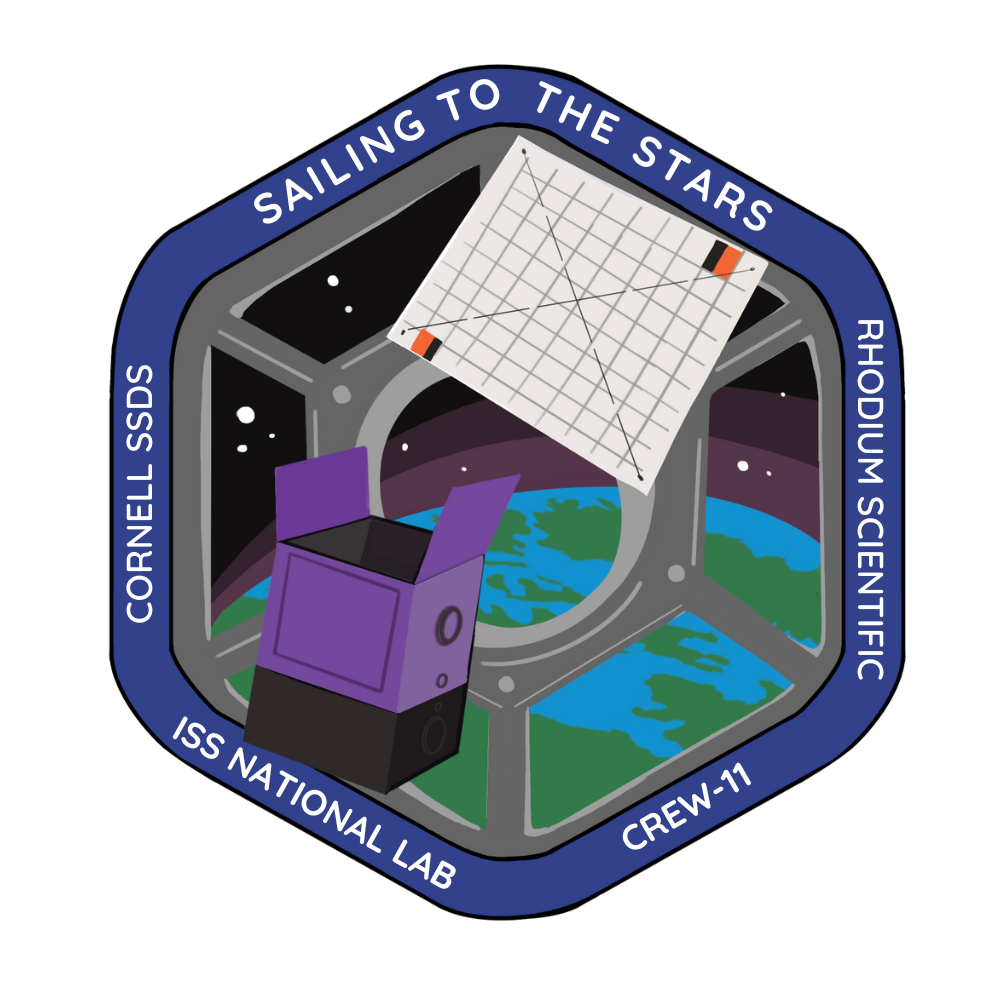
Sailing to the Stars
Sailing to the Stars is a technology demonstration designed by Cornell University’s Space Systems Design Studio in partnership with Rhodium Scientific. The mission tests the deployment dynamics of lightweight light sails in microgravity, a critical step toward enabling interstellar travel with ChipSat-scale spacecraft. Using a CubeSat-sized deployer aboard the ISS, astronauts will record multiple sail releases to evaluate stability and spin-stabilization methods. The experiment engages students and the public through workshops, livestreamed demonstrations, and museum partnerships, inspiring future space engineers while maturing a breakthrough propulsion technology.
-
SpaceAg Veterans
Rhodium SpaceAg Veterans is the fourth mission within Rhodium’s Astrobotany Program, uniting four Veteran-owned agricultural businesses from Alabama to tackle space and terrestrial crop science challenges. This mission investigates how microgravity and low-dose radiation affect plant growth, microbial soil enhancement, and pest control strategies. By testing seeds (treated and untreated with microbial consortia) and microbial populations in the ISS environment, the mission aims to discover novel adaptations that enhance nitrogen cycling, soil productivity, and crop yield. These insights will be directly translatable to improving agricultural outcomes on Earth.
-
Rhodium Stem Cell 01
Successful demonstration of this method for expanding MSCs in small batches could enable tests of larger scale expansion and advance the capability for biomanufacturing MSCs in space. The ability to expand MSCs in space could translate to improvements in manufacturing on Earth or enable in-space production to treat patients on Earth.
Collaboration with University of Puerto Rico Mayaguez, Mayaguez, Puerto Rico
Sponsored by ISS National Laboratory with support from NASA
-

Rhodium Water Filtration
This investigation could identify ways to enhance water filtration in microgravity and support increased recycling of wastewater for future space missions. Improved water filtration devices could reduce the cost and energy needed to produce safe water in remote and resource-limited locations on Earth.
-

Rhodium USAFA NIGHT
This investigation could enhance our knowledge of the changes seen in plants grown in space and their effect on development and growth, supporting the development of methods to increase crop production for future missions. Results from this study could identify modifications that increase the production of crop plants on Earth, particularly those grown in enclosed structures.
Collaboration with US Air Force Academy
Sponsored by ISS National Laboratory with support from NASA
-
UC Berkeley
-> Designing modular bioreactor systems for economic bioproduction scale-out.
-> Commercialization of novel DAC and fuel cell technologies.
-

EMBeR^2 Lab
-> Wastewater Monitoring for SARS-Cov-2
Conducted in junction with the BC Center for Disease Control and UBC, this project quantified viral load and viral genomes in Vancouver and University wastewater streams. The data collected was used to directly plan quarantine and public health measures. (RT-PCR, Library prep, Nanopore sequencing, Flow-cell loading)
-> Bioreactor Rapid Genetic Sequencing
This project focused on the creation of a bioreactor microbial genome library for rapid genetic sequencing and subsequent fine tuning of the bioreactors. (Sample storage, shotgun metagenomic sequencing, MAGs assembly)
-

Crowe Lab
-> Enhanced Silicate Weathering
This project investigated the effects of biological weathering on ultramafic rock dissolution for use in carbon sequestration technologies. This paper is in review for publication. (PCR, DNA Seq, ICP-OES)
-> Microbial Nitrogen Cycling in anoxic Environments
This project focused on the identification of novel Nitrogen reduction pathways in Environmental conditions. (Isotope enrichment, OD measurements, Reactor setup)
-

Suttle Lab
-> Redefining Life
This project focuses on the design of a new framework for life. By creating a branched tree of categories, our definition of life is more inclusive and more useful for astrobiological discoveries. This paper is in review for publication.
-

McKay Lab
-> Yellowstone Metagenomics
This project investigated the microbial communities of various hot springs in Yellowstone National Park. I was responsible for building bioinformatic pipelines for shotgun metagenomic analysis. (bioinformatic processes using METASpades, STAR, BWA, and HISeq methods)
-

Independent Bioinformatics
-> Wetland metagenomics
This project investigated the impact of urban population centers on the native microbial communities in New York State wetlands. This paper is currently in review for publication. (QIIME2, R-studio, DESeq, Phyloseq, and the various data processing/statistical pipelines)
Publications
Tanya Balaji, Azraa Banka, Daven Kuder, Raveen Sidhu “Microbial Diversity and Population Density is Positively Correlated in New York State Freshwater Wetlands.” 2023